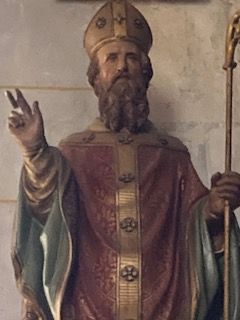
Saint Martin de Tours
Key points to understand its importance include:
1. The episode of Charity (Amiens)
It is the most famous image associated with Saint Martin. A young Roman soldier of the imperial guard, he met a poor cold-cold man at the gates of Amiens. With more money, he slice his military coat (his chlamyde) in half with his sword to give half to the beggar.
From the army to the episcopate
• Hermit: After leaving the army, he became a disciple of Saint Hilaire in Poitiers. He founded Ligged the first monastery of Gaul in 361.
• The bishop despite him: In 371, the inhabitants of Tours chose him as bishop. The legend tells that he had hidden himself in a goose to escape this charge, but that the cries of the volatiles would have betrayed.
• Marmoutier: As bishop, he founded the Abbey of Marmoutier, which would become a centre of major intellectual and missionary influence.
3. His influence and worship
• Evangelization of the countryside: Unlike many of his time bishops who remained in the city, Martin travelled through rural areas to convert peasant populations and destroy pagan temples.
• Pilgrimage: After his death in Candes in 397, his body was brought back to Tours. St. Martin's Basilica became one of the most important places of pilgrimage in the Middle Ages, on one of the roads leading to Santiago de Compostela.
• Summer of St. Martin: The term refers to a period of softness in November. It derives from the legend that the flowers would have bloomed at the passage of the boat carrying its body on the Loire in the middle of autumn.
4. Geographical radiation
Martin is one of the most widely used surnames in France, and thousands of churches and communes (such as Saint-Martin-de-Heres, Saint-Martin-de-Ré, etc.) bear his name across Europe.